AWA + ODORI
“Awa” is the former name of Tokushima. “Odori” simply means dance.

Awa Odori 2026 / Tokushima City
We dance
Tokushima.
INDEPENDENT GUIDE / NOT AN OFFICIAL FESTIVAL WEBSITE
Start here ↓01 / Awa Odori, explained
Awa Odori is a Japanese summer dance festival born in Tokushima. It is not one giant synchronized dance. Many independent troupes take turns transforming the city streets into moving stages.
Tokushima City sits on the eastern side of Shikoku, the smallest of Japan's four main islands.
“Awa” is the former name of Tokushima. “Odori” simply means dance.
A ren is one troupe: dancers, musicians, costumes, choreography and a character of its own.
Ren vary in size. A large troupe may bring around 100 or more dancers and musicians into one formation.
Taiko drums, kane bells, shamisen and flutes drive the two-beat rhythm called zomeki.
A ren enters a performance avenue in formation and keeps moving forward between the grandstands. What you watch is a complete procession: the lantern lead, lines of dancers and live musicians building the rhythm from entrance to exit.
One possible formation. Order and scale vary by ren and performance.ENTRANCE → PERFORMANCE → EXITThe audience watches one complete ren pass from beginning to end.
02 / This is Ebisu Ren
We are Ebisu Ren, an Awa Odori group rooted in Tokushima.
Every summer we return to the streets with dancers, taiko, kane, shamisen and flute. This page is our view of the festival we love: personal, independent and made by a participating ren.
Ebisu Ren is not the festival organizer and does not operate venues or sell tickets.

Not a spectacle from somewhere else.
A living part of our city.
03 / Tokushima City
For more than 400 years, Awa Odori has evolved in Tokushima into one of Japan's most distinctive urban dance traditions.
Its origin is told through several stories. One links the dance to celebrations around the completion of Tokushima Castle in the late sixteenth century; others trace it to Bon dance and older furyu performance traditions.
Tokushima's indigo and salt trade helped support a rich merchant culture, and the dance grew more elaborate with it. After the war, Awa Odori returned as a vivid symbol of recovery. Today, each ren keeps the form alive through its own sound, movement and personality.

A tradition survives by moving forward.
04 / Festival period
Opening programs introduce the festival period before the main nights fill central Tokushima.
Ren move through performance routes, plazas, streets and stages across the city center.
Dates shown are the announced 2026 festival period. Programs, times, venue names, admission conditions and operations may change. Confirm current details directly with the festival organizer before travel.
EBISU REN / 2026
All times are scheduled. Grandstand and performance-route dance-in times may shift by approximately 15 minutes depending on festival operations.
05 / Where to watch
Tokushima becomes a network of grandstands, street routes and dance plazas. Some require a ticket. Several of the most immediate views are completely free.
Choose a paid grandstand for a reserved viewpoint and a complete procession from entrance to exit.
3 grandstandsFree performance routes and outdoor dance plazas put you close to the sound without a festival ticket.
5 free viewing areasNiwaka Ren is the drop-in way for visitors to learn the step and enter the festival as dancers.
No experience needed
Sajiki are grandstands built along a dance avenue. A ren enters at one end and performs while moving forward, so you can see spacing, formation and musical build from beginning to end.
In 2026 there are three paid grandstands, two free performance routes and three free dance plazas.Central Tokushima / Orientation
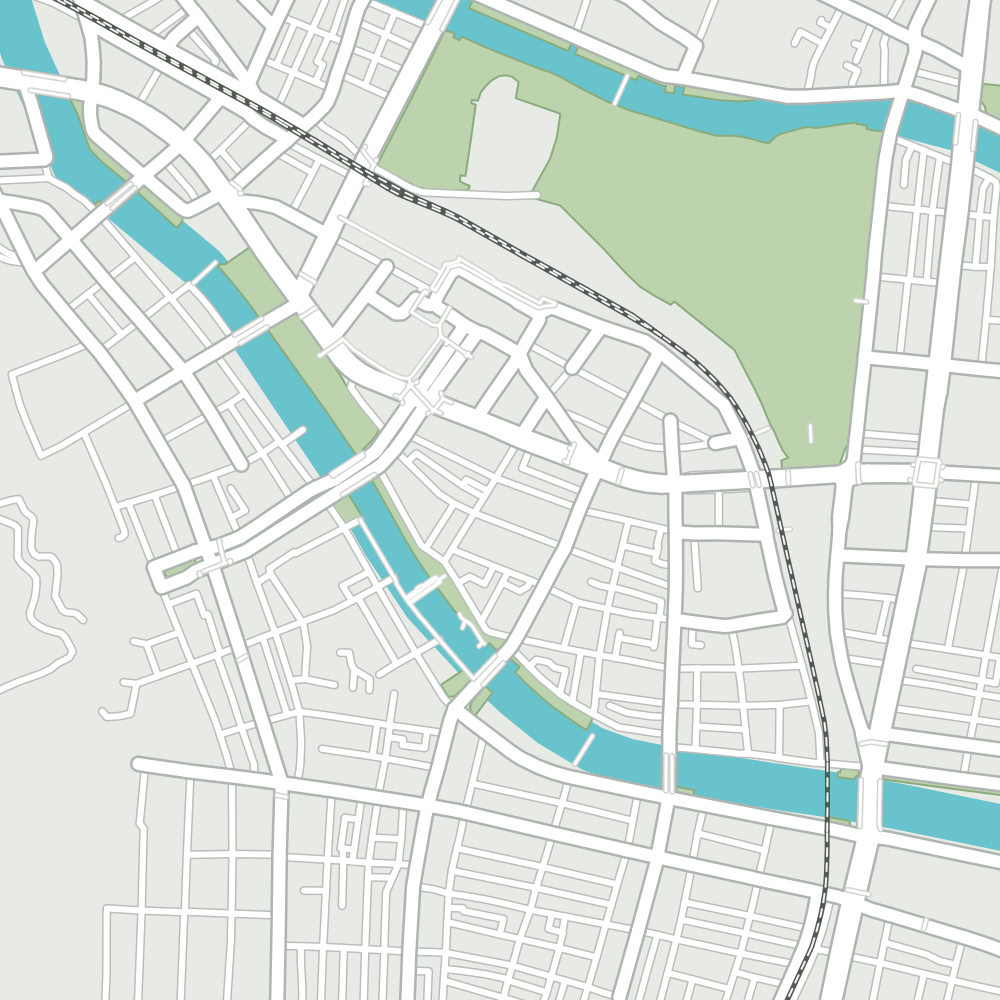
Read the city from north to south: JR Tokushima Station and Tokushima Central Park, the curve of Shinmachi River, then the streets toward Awa Odori Kaikan and Mt. Bizan.
2026 outdoor venues / August 12-15
Paid grandstands run in two sessions. Free routes and plazas continue through the evening, subject to crowd and operating conditions.
The largest paid grandstand and the closest to the station. A strong first choice for scale, energy and easy access.
Known for an intense, theatrical atmosphere. The late session traditionally builds toward a large collective finale.
An atmospheric route near the foot of Mt. Bizan and Tokushima's nightlife district. The format changes for one special 2026 session.
The longest performance route, running through the shopping street. Excellent for a close, continuous view of many different ren.
A classic city-center setting near the entrance to the Higashi Shinmachi shopping arcade and the bridge celebrated in Awa Odori song.
An outdoor-stage viewpoint near the south end of Shinmachi Bridge. Best when you want character and choreography at close range.
A compact outdoor-stage atmosphere near the south end of Ryogoku Bridge. Expect lively crowds and a more intimate distance.
A street-level dance plaza in the Tomimachi entertainment quarter, between the Ryogoku Bridge area and Konyamachi.
Free means no festival admission ticket is required. Space is not guaranteed and crowd controls may apply. Venue operations, times and access can change.
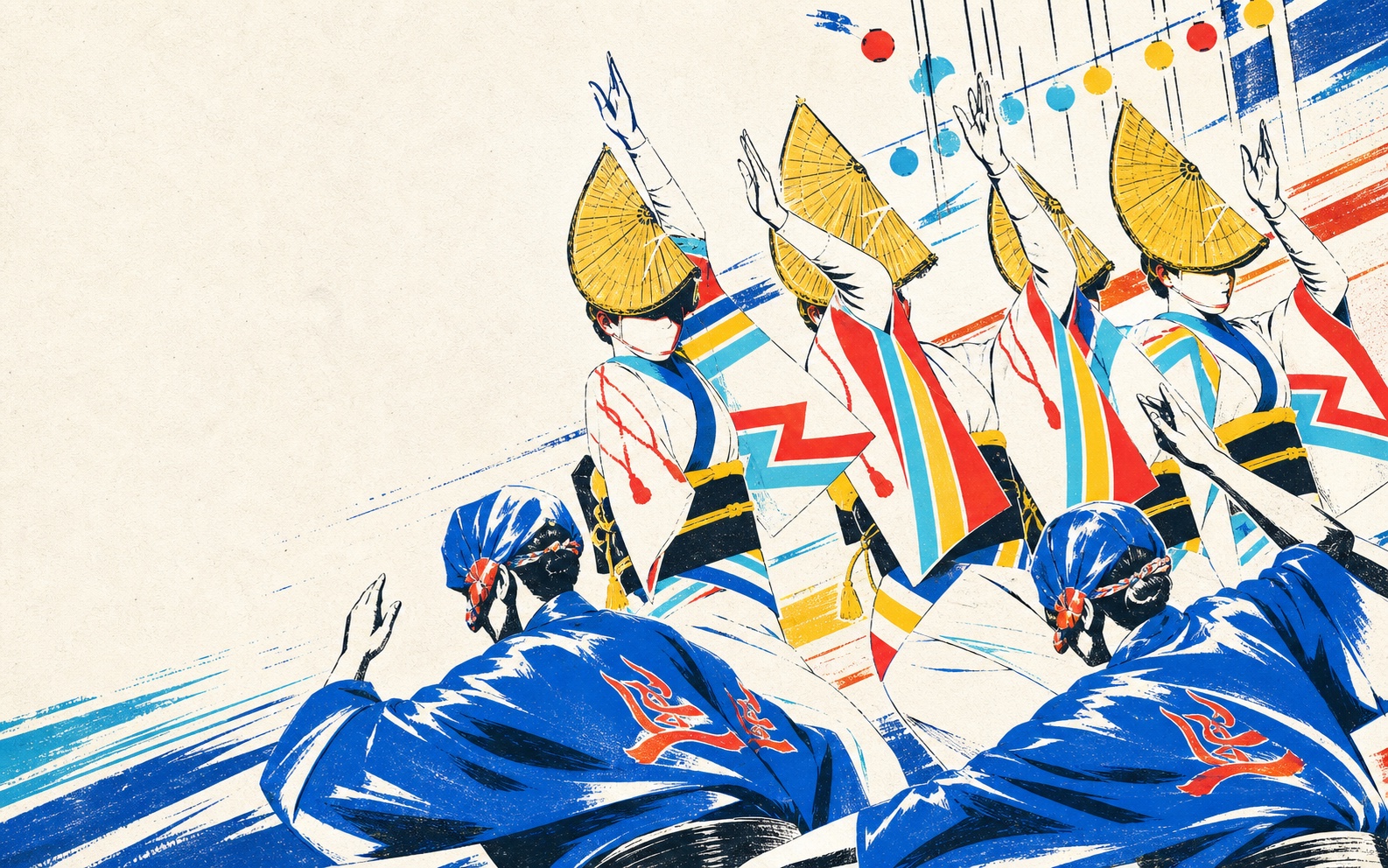
One line of dancers becomes a current. One rhythm carries the whole street.
Awa Odori is built on the idea that the dancer and the watcher belong to the same rhythm. Niwaka Ren is the organized drop-in format for visitors: learn the basic step, follow the musicians and enter the night as a dancer.

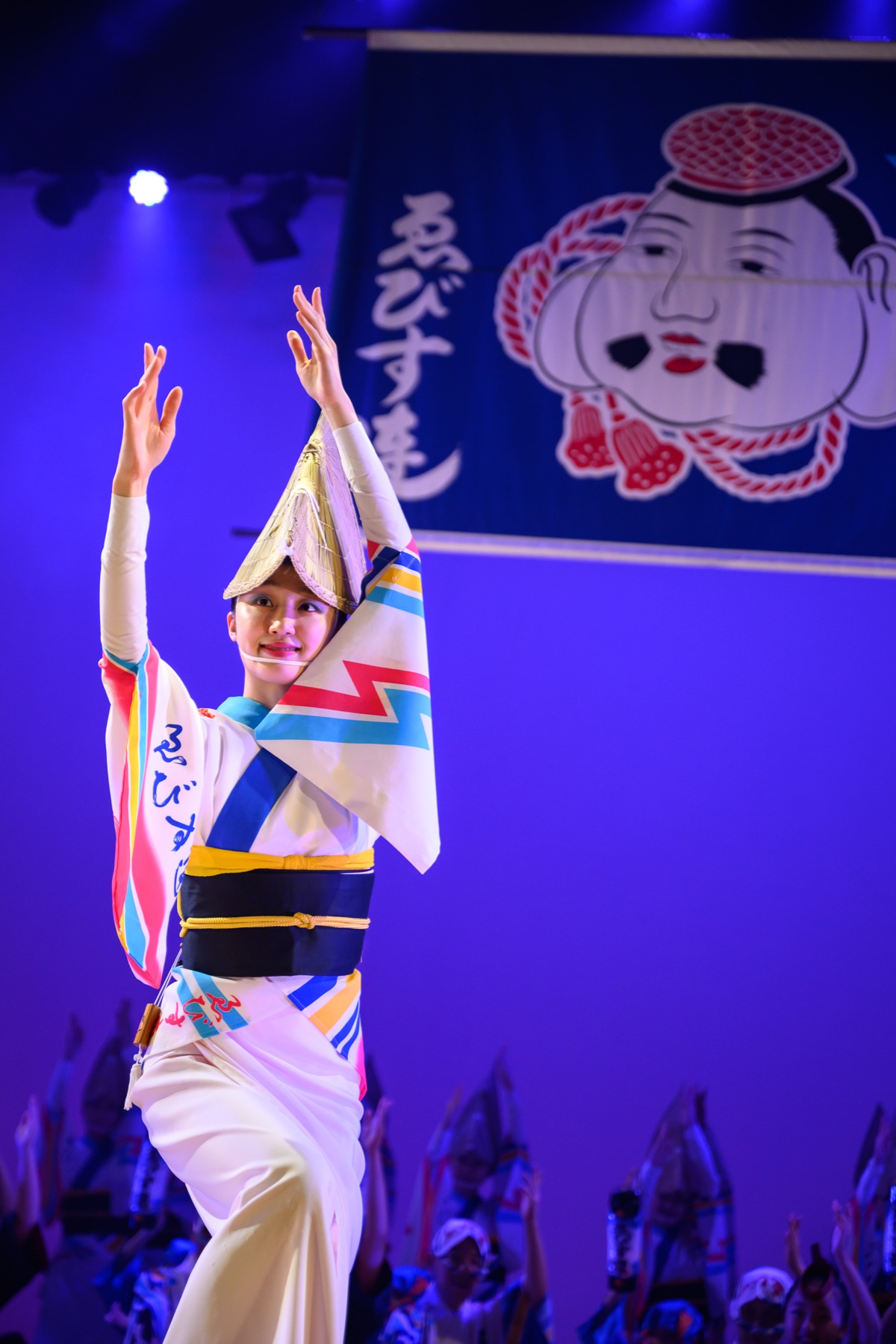
ONNA ODORI / WOMEN'S DANCE
06 / How Ebisu Ren moves
Raised arms, compact steps and the sculptural amigasa hat create a silhouette that can look delicate from afar and intensely athletic up close.
07 / Before you go
Let the sound guide you. Each block, route and performance space offers a different density and point of view.
Leave room for the unplanned moments between performances. A distant drum may lead to a small circle, a close encounter or a rhythm you carry home.
This is an editorial introduction by Ebisu Ren, not an official Tokushima City Awa Odori website. We do not guarantee schedules, venue operations, admission, availability or other event services.
WE ARE
EBISU REN.